Belief in God is one of the oldest and most powerful ideas in human history. From ancient villages to modern cities, from temples to personal prayers, this belief continues to shape lives in visible and invisible ways. But a simple question still remains: why do people believe in God?

Is it fear? Is it hope? it tradition? Or is there something deeper—something that words cannot fully capture?
Let’s explore this question in a thoughtful, simple, and human way that connects with everyday life, especially in the Indian context where spirituality is not separate from living.
The Human Need to Find Meaning in Life
Every human being, at some point, asks:
Why am I here? What is the purpose of life?

Life is not just about eating, earning, and sleeping. There is always a silent curiosity inside us that wants to understand existence itself.
Belief in God often begins here.
When people cannot find clear answers in the material world, they turn inward or upward. God becomes a symbol of ultimate meaning—a way to explain life beyond logic.
In Indian households, this often starts early. A child sees elders praying, visiting temples, or folding hands before eating. Slowly, belief becomes part of understanding life itself—not as a forced idea, but as a natural orientation toward meaning.
Fear of the Unknown and the Desire for Security
Let’s be honest—life is unpredictable.

No matter how educated or successful a person becomes, there are moments when everything feels uncertain:
- Illness
- Loss of loved ones
- Financial struggles
- Unexpected failures
In such moments, logic alone doesn’t provide comfort.
Belief in God acts like emotional support. It creates a feeling that someone is watching, guiding, protecting. Even if things go wrong, there is a sense that it is part of a bigger plan.
This belief reduces anxiety. It gives psychological stability.
But calling it “just fear” would be incomplete. It is not only about fear—it is also about trust.
The Power of Hope and Inner Strength
Belief in God is deeply connected to hope.

When everything seems lost, people still say:
“Bhagwan sab theek karega” (God will make everything right)
This is not just a sentence—it is a survival mechanism.
Hope keeps people moving forward. And belief in God strengthens that hope.
For example:
- A student praying before exams
- A patient believing in recovery
- A farmer trusting the rains
These are not blind acts. They are expressions of inner strength powered by belief.
In this way, God becomes less of an external entity and more of an internal source of courage.
Cultural and Social Influence on Belief
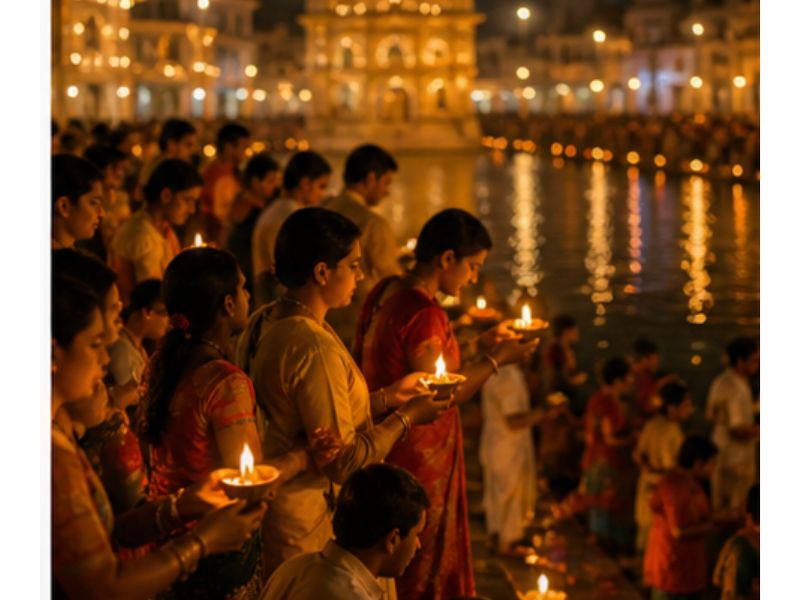
In India, belief in God is not only personal—it is deeply cultural.
Festivals, rituals, and traditions continuously reinforce this belief:
- Diwali
- Navratri
- Eid
- Gurpurab
These are not just religious events—they are emotional experiences that bring people together.
From childhood, people learn:
- How to pray
- When to fast
- Why to respect certain practices
Over time, belief becomes part of identity.
Even those who question God rarely escape the cultural influence of spirituality.
The Experience of Something Beyond Logic

Not everything in life can be explained scientifically.
People often have experiences that feel beyond logic:
- A sudden intuition that turns out true
- Feeling peace during prayer or meditation
- Coincidences that feel meaningful
Such moments make people feel that there is something greater than human understanding.
This “something” is often called God.
It’s important to understand—belief is not always based on proof. Sometimes, it is based on experience.
And experiences are deeply personal.
God as a Reflection of Human Values
Another interesting perspective is this:
People believe in God because God represents the highest human values.
Think about it:
- Kindness
- Compassion
- Truth
- Forgiveness
All these qualities are often associated with God.
When people worship God, they are also, in a way, respecting these values.
In this sense, belief in God becomes a moral guide. It helps people differentiate between right and wrong—not just through rules, but through inner understanding.
The Comfort of Surrender
Modern life often pushes us to control everything:
- Career
- Relationships
- Future plans
But the truth is—we cannot control everything.
Belief in God offers something very rare:
the ability to surrender
Surrender does not mean weakness. It means accepting that not everything is in our hands.
This acceptance brings peace.
In Indian philosophy, this idea is very strong:
- Do your duty
- Leave the result to a higher power
This mindset reduces stress and helps people live more peacefully.
Is Belief in God Logical or Emotional?
This is a common debate.
Some people say belief in God is irrational. Others say it is deeply meaningful.
The truth lies somewhere in between.
Belief is not purely logical, but it is not meaningless either.
It operates on a different level—emotional, psychological, and existential.
Just like love cannot be proven scientifically but is still real, belief in God also exists beyond strict logic.
Why Some People Don’t Believe in God
To understand belief, it’s also important to understand disbelief.
Some people do not believe in God because:
- They rely only on scientific reasoning
- They have had negative experiences with religion
- They see belief as superstition
And that’s valid.
Belief is a personal choice, not an obligation.
Interestingly, even those who don’t believe in God often seek:
- Meaning
- Peace
- Purpose
Which shows that the need behind belief is universal—even if the expression is different.
The Psychological Benefits of Believing in God
Modern psychology has also explored this topic.
Belief in God can:
- Reduce stress and anxiety
- Improve emotional resilience
- Provide a sense of community
- Increase optimism
Prayer and meditation, often linked with belief, calm the mind and improve focus.
So even from a practical perspective, belief can be beneficial.
God as a Personal Experience, Not a Concept
One of the most important things to understand is this:
God is not just an idea—it is an experience.
For some, God is:
- A form (idol, image)
- A feeling (peace, love)
- A presence (something guiding)
- Or even silence
There is no single way to define God.
This is why belief looks different for different people.
The Indian Spiritual Perspective on Belief
Indian philosophy offers a unique view.
It does not force belief. Instead, it invites exploration.
Concepts like:
- Karma (action and consequence)
- Dharma (duty)
- Moksha (liberation)
All connect belief in God with self-understanding.
In many teachings, God is not separate from you.
God is within you.
This shifts belief from external worship to internal awareness.
Does Belief in God Make Life Better?
This depends on how belief is used.
Healthy belief:
- Brings peace
- Encourages kindness
- Builds resilience
Unhealthy belief:
- Creates fear
- Encourages blind following
- Limits questioning
The difference lies in awareness.
Belief should not stop thinking—it should deepen it.
A More Honest Way to Look at Belief
Instead of asking:
“Does God exist?”
A more useful question might be:
“What does belief in God do for a person?”
Because belief is less about proving God and more about understanding human nature.
It tells us:
- What we fear
- What we hope for
- What we value
In that sense, belief in God is also a mirror.
Conclusion: Belief is a Journey, Not a Rule
People believe in God for many reasons:
- To find meaning
- To feel safe
- To stay hopeful
- To connect with something greater
But the deeper truth is—belief is not static.
It changes with life experiences.
Sometimes strong, sometimes doubtful, sometimes silent.
And that’s okay.
Belief in God is not about having all the answers.
It is about being open to questions.
In the end, whether someone believes in God or not, the real journey is the same:
To understand life, to find peace, and to live with awareness.
FAQs on Why People Believe in God
Q1. Why do people believe in God when there is no proof?
People believe in God not because of scientific proof, but because of personal experience, emotional connection, and inner need for meaning. Just like love or trust cannot be proven in a lab but are still real, belief in God exists beyond physical evidence. For many, it is about feeling, not measuring.
Q2. What are 10 reasons to believe in God?
Here are some common reasons why people believe in God:
- To find meaning in life
- To cope with uncertainty and fear
- Cultural and family influence
- Personal spiritual experiences
- Hope during difficult times
- Moral guidance (right vs wrong)
- Feeling of protection and support
- Curiosity about existence
- Inner peace through prayer or meditation
- The sense that life has a higher purpose
These reasons are not proofs—but they are deeply human.
Q3. Why do people believe in God?
People believe in God for a mix of emotional, psychological, cultural, and spiritual reasons. It helps them deal with life’s uncertainties, gives hope, and creates a sense of connection with something greater than themselves.
Q4. Why do people believe in God from a psychology perspective?
From a psychological point of view, belief in God helps reduce anxiety, provides comfort, and creates a sense of control in uncertain situations. It also strengthens resilience and gives emotional stability during stress or loss.
Q5. Why do some people believe in God and others don’t?
Belief depends on personal experiences, upbringing, education, and thinking style. Some people rely more on faith and intuition, while others depend on logic and scientific reasoning. Neither is completely right or wrong—it’s a personal path.
Q6. Why do we believe in God psychologically?
Psychologically, humans are wired to seek patterns, meaning, and security. Belief in God satisfies these needs by offering explanations for life, reducing fear, and creating emotional comfort.
Q7. Do high IQ people believe in God?
Yes, some do and some don’t. Intelligence does not directly decide belief. Many highly intelligent people are religious or spiritual, while others are not. Belief is influenced more by personal perspective than IQ.
Q8. Is there 100% proof that God is real?
No, there is no universally accepted scientific proof of God. Belief in God is based on faith, personal experience, and philosophical thinking rather than measurable evidence.
Q9. Is belief in God a mental disorder?
No, belief in God is not a mental disorder. It is a normal human behavior shared by billions of people across cultures. However, like anything, extreme or harmful forms of belief may need attention—but belief itself is not unhealthy.
Q10. Is believing in God a coping mechanism?
Yes, for many people, belief in God acts as a coping mechanism. It helps them deal with stress, fear, and difficult situations. But it is not only a coping mechanism—it can also be a source of meaning, discipline, and inner growth.