Self realisation is not just a concept—it is a quiet revolution within a human being. In a world where we are constantly taught how to achieve, compete, and prove ourselves, very few people are taught how to truly know themselves. And yet, this inner knowing is the foundation of a meaningful life.
In India, the idea of self realisation has always been deeply rooted in spirituality, philosophy, and everyday wisdom. From ancient scriptures to modern thinkers, one message remains constant: what you are searching for outside already exists within you.
But what does self realisation actually mean? Is it something mystical, or something practical? And more importantly, how does it change the way we live, think, and relate to the world?
Let’s explore this deeply, in a way that feels real, simple, and connected to everyday life.
What is Self Realisation in Simple Words
Self realisation is the understanding of your true nature beyond labels, roles, and identities. It is the moment when you stop identifying only with your name, job, or social image and begin to see who you really are at a deeper level.

Most of us believe:
- “I am my career”
- “I am my achievements”
- “I am what others think of me”
But self realisation gently breaks this illusion.
It asks a simple but powerful question:
“If everything external is removed, who are you?”
This is why many people search for self realisation meaning—because it cannot be fully explained, it has to be experienced.
Why Self Realisation Matters in Today’s Life
In today’s fast-paced world, people are more connected digitally but more disconnected internally. Stress, confusion, comparison, and constant pressure have become normal.

Self realisation brings clarity.
It helps you:
- Understand your thoughts instead of being controlled by them
- Make decisions with awareness, not fear
- Feel peaceful even in uncertain situations
- Stop seeking validation from others
When you begin to understand yourself, life becomes less complicated. You don’t react blindly—you respond consciously.
The Difference Between Knowledge and Realisation
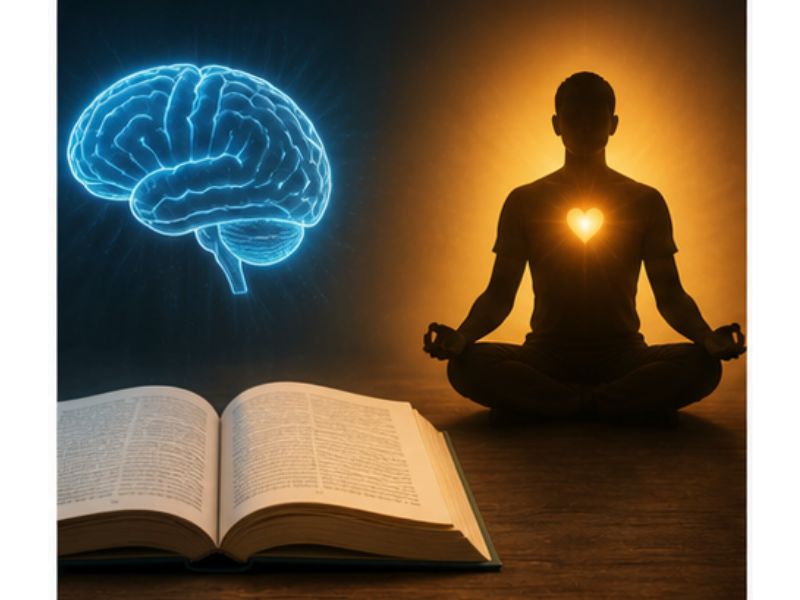
Many people read books, watch videos, and collect information about spirituality. But self realisation is not about information—it is about transformation.
Knowing “I should stay calm” is knowledge.
Actually remaining calm in a difficult situation is realisation.
Knowing “I am not my thoughts” is knowledge.
Watching your thoughts without getting disturbed is realisation.
This is why the science of self realisation is not theoretical—it is experiential.
The Inner Journey: How Self Realisation Begins
Self realisation does not start with big changes. It begins with small awareness.

1. Observing Yourself Honestly
Start noticing your thoughts, emotions, and reactions without judging them.
Ask yourself:
- Why did I react like this?
- What am I afraid of?
- What do I really want?
This simple awareness is the first step.
2. Accepting Your Reality
Self realisation is not about becoming perfect. It is about accepting what is.
The moment you stop pretending, growth begins.
3. Questioning Your Beliefs
Many of our beliefs are borrowed—from society, family, and culture.
Ask yourself:
- Is this truly my belief?
- Or have I just accepted it without thinking?
This questioning creates inner freedom.
How to Achieve Self Realisation (Practical Perspective)
Many people search for how to achieve self realisation, expecting a fixed method. But the truth is, there is no single path. However, some practices can guide you.
Meditation: The Gateway Within
Meditation is one of the most powerful tools for self realisation. It helps you move from noise to silence.
You don’t need complicated techniques. Just sit quietly and observe your breath.
Over time, you will notice:
- Your thoughts slow down
- Your awareness increases
- Your reactions reduce
This is why self realisation meditation is widely practiced.
Silence and Solitude
We are always surrounded by noise—phones, people, opinions.
Spending time alone helps you reconnect with yourself.
Even 10–15 minutes of silence daily can create a shift.
Conscious Living
Self realisation is not separate from daily life.
You can practice awareness while:
- Eating
- Walking
- Talking
- Working
The idea is simple: be present.
The Role of Spirituality in Self Realisation
Self realisation is deeply connected with spirituality, but spirituality here does not mean rituals or religion.
It means:
- Understanding life beyond material success
- Feeling connected with something larger than yourself
- Experiencing inner peace without external reasons
In Indian philosophy, this journey is often guided by a teacher or a guru. But the real teacher is your own awareness.
Common Misconceptions About Self Realisation
Many people misunderstand this concept. Let’s clear a few myths.
Myth 1: Self Realisation is Only for Saints
Truth: It is for everyone. You don’t need to leave your job or family.
Myth 2: It Happens Suddenly
Truth: It is a gradual process. Small awareness leads to deeper understanding.
Myth 3: It Means Giving Up Everything
Truth: It actually helps you live life more fully, not less.
Signs You Are Moving Towards Self Realisation
You may not realise it immediately, but certain changes begin to appear.
- You react less and observe more
- You feel less affected by others’ opinions
- You become comfortable being alone
- You start questioning your own thoughts
- You experience moments of deep peace without reason
These are subtle but powerful shifts.
The Role of a Teacher in Self Realisation
Now here is something different and deeper.
A true teacher is not someone who gives answers. A true teacher creates questions within you.
In a spiritual sense, a teacher helps you:
- See your illusions
- Face your fears
- Discover your truth
But here’s the important part:
A real teacher does not make you dependent. They make you independent.
Don’t say, “Follow me.”
They say, “Understand yourself.”
Uncommon Qualities of a Teacher in the Journey of Self Realisation
Most people talk about knowledge, communication, and experience. But from a deeper perspective, a teacher guiding self realisation has very different qualities.
1. The Ability to Create Inner Discomfort
A true teacher does not always comfort you. Sometimes they challenge your beliefs.
Because growth begins where comfort ends.
2. The Courage to Break Your Illusions
Instead of giving you pleasant ideas, they show you reality—even if it feels uncomfortable.
3. Silent Teaching
Not everything is taught through words.
Sometimes, a teacher’s presence, behavior, and silence teach more than lectures.
4. Seeing Beyond Your Personality
While others see your behavior, a true teacher sees your potential.
They don’t define you by your mistakes.
5. Teaching You to Outgrow Them
This is rare.
A true teacher wants you to become so aware that you no longer need guidance.
Self Realisation and Freedom
One of the biggest benefits of self realisation is freedom.
Not political freedom. Not social freedom.
Inner freedom.
Freedom from:
- Constant thinking
- Fear of judgment
- Need for validation
- Emotional dependency
When you understand yourself, you stop being controlled by external situations.
Self Realisation in Daily Indian Life
You don’t need to go to the Himalayas to experience this.
You can practice self realisation:
- While sitting in traffic
- While dealing with work pressure
- While handling relationships
It is not about changing your environment.
It is about changing your awareness.
Why Most People Avoid Self Realisation
Let’s be honest.
Self realisation sounds beautiful, but it is not always easy.
Because it requires:
- Facing your fears
- Accepting your weaknesses
- Letting go of false identities
And most people prefer comfort over truth.
But the ones who take this path discover something deeper than success—peace.
Self Realisation Quotes (Understanding Through Reflection)
Sometimes a simple line can create deep insight:
- “What you are looking for is what is looking.”
- “You are not your thoughts, you are the observer of them.”
- “Silence is not empty, it is full of answers.”
These are not just quotes—they are pointers.
Final Thoughts: The Real Meaning of Self Realisation
Self realisation is not a destination.
It is an ongoing journey.
You don’t “achieve” it once and finish. You grow into it, layer by layer.
At its core, it is about:
- Living consciously
- Understanding deeply
- Being present fully
And most importantly:
It is about becoming real in a world full of pretence.
When you begin this journey, life may not become easier—but it becomes clearer.
And clarity is more powerful than comfort.
FAQs
Q1. Self-realization vs self-actualization?
Self-realization and self-actualization are often used interchangeably, but they are not the same.
Realization is about knowing your true self beyond identity, ego, and social roles. It is deeply spiritual and inward.
Self-actualization, a concept introduced by Abraham Maslow, is about reaching your full potential—your talents, creativity, and abilities in the external world.
In simple terms:
- Self-realization = “Who am I?”
- Self-actualization = “What can I become?”
Both are important, but self-realization goes deeper.
Q2. Self realization book?
There are many books that explore self-realization from different perspectives. A few widely read ones include:
- Autobiography of a Yogi – A powerful spiritual journey into self-realization.
- The Power of Now – Focuses on awareness and living in the present moment.
- The Untethered Soul – Explains how to detach from thoughts and emotions.
These books don’t just give knowledge—they invite inner reflection.
Q3. Self-Realization Fellowship?
Self-Realization Fellowship is a global spiritual organization founded by Paramahansa Yogananda.
Its purpose is to spread teachings on meditation, inner peace, and self-realization. It combines ancient Indian wisdom with practical spiritual practices for modern life.
Many seekers follow its meditation techniques to experience deeper awareness.
Q4. Self-realization meaning in philosophy?
In philosophy, self-realization refers to understanding one’s true nature and existence.
Different philosophical traditions interpret it differently:
- In Indian philosophy, it is about realizing the Atman (true self).
- In Western philosophy, it often relates to self-awareness and authenticity.
Philosophically, it asks:
- What is the self?
- Is the self permanent or changing?
- What is the purpose of human life?
It is not just thinking—it is deep inquiry.
Q5. Self-realization spiritual meaning?
Spiritually, self-realization means realizing that your true self is not limited to the body or mind.
It is the experience of:
- Inner stillness
- Connection with universal consciousness
- Freedom from ego and illusion
In simple words, it is the shift from “I am this person” to “I am pure awareness.”
Q6. Self realization definition psychology?
In psychology, self-realization is often linked with self-awareness and personal growth.
It includes:
- Understanding your thoughts and emotions
- Recognizing behavioral patterns
- Becoming conscious of your inner world
While psychology focuses more on the mind, spiritual self-realization goes beyond the mind.
Q7. What is the meaning of self-realization?
Self-realization means discovering who you truly are beyond your name, role, and identity.
It is the awareness that:
- You are not just your thoughts
- You are not just your past
- You are something deeper and more stable
It is not something you learn—it is something you realize.
Q8. What are your self-realizations?
Self-realizations are personal insights that come from deep awareness.
For example:
- Realizing that overthinking creates unnecessary stress
- Understanding that happiness does not depend on others
- Seeing your fears clearly instead of avoiding them
These realizations are not taught—they are experienced.
Q9. What is self-realization in the Bhagavad Gita?
In Bhagavad Gita, self-realization is about understanding your true self (Atman) and its connection with the ultimate reality (Brahman).
Through the teachings of Krishna to Arjuna, it explains that:
- You are not the body, but the eternal soul
- Detachment leads to peace
- Right action without attachment leads to liberation
It presents self-realization as a path of wisdom, devotion, and action.
Q10. What does self-realization feel like?
Self-realization is not a dramatic event for most people. It is subtle and deep.
May feel like:
- A sense of inner calm without reason
- Clarity in thoughts and decisions
- Reduced emotional reactions
- Feeling complete even without external success
It is less about excitement and more about peace and clarity.