Have you ever paused and wondered what the word philosophy really means? Is it simply a subject taught in universities, or is it something deeper — a way of thinking, questioning, and living?
The word “philosophy” carries centuries of intellectual history, cultural influence, and profound human inquiry. It shapes how we understand truth, knowledge, morality, existence, and even ourselves. In this detailed guide, we will explore the meaning of the word philosophy, its origin, evolution, branches, and its relevance in modern life.
By the end of this article, you will not only understand what philosophy means but also why it remains one of the most powerful intellectual traditions in human history.
The Literal Meaning of the Word Philosophy
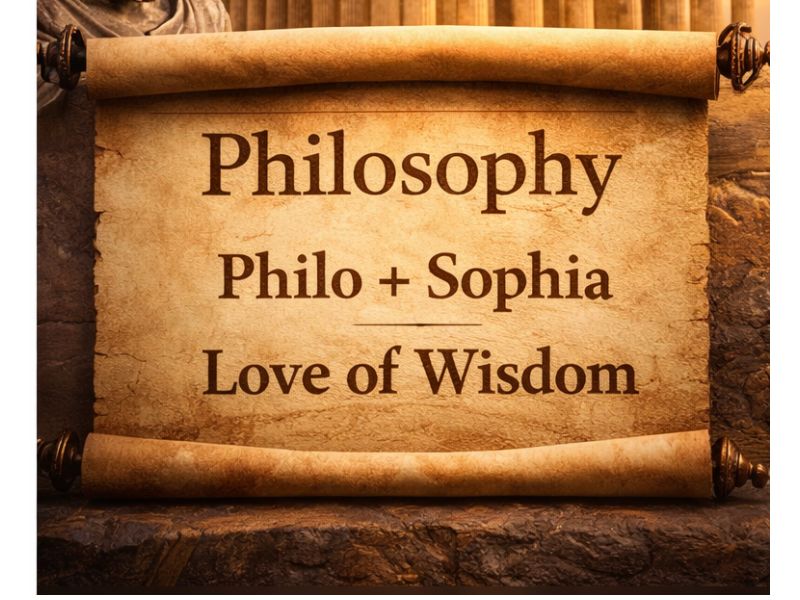
The word philosophy comes from the ancient Greek term philosophia. It is formed from two Greek words:
- Philo (phílos) – meaning love or affection
- Sophia (sophía) – meaning wisdom
So, the literal meaning of philosophy is “love of wisdom.”
This term is traditionally attributed to Pythagoras, who is believed to have first used the word to describe himself not as a wise man, but as someone who loves wisdom and seeks it.
This distinction is important. Philosophy is not about claiming to possess ultimate knowledge; it is about the continuous pursuit of understanding.
What Does Philosophy Mean in a Broader Sense?

Beyond its literal translation, philosophy means:
- The study of fundamental questions about life, reality, and knowledge
- A systematic way of thinking critically and logically
- A personal worldview or guiding belief system
- An intellectual discipline that examines assumptions
In simple terms, philosophy is the disciplined search for truth.
It asks questions like:
- What is real?
- What can we know?
- What is right and wrong?
- Does life have meaning?
- What is the nature of consciousness?
Unlike science, which relies primarily on experiments, philosophy relies on reasoning, argument, analysis, and reflection.
The Historical Origin of Philosophy
Philosophy in Ancient Greece
Philosophy as a formal discipline began in ancient Greece around the 6th century BCE. Early thinkers attempted to explain the natural world without relying on mythology.
Some of the most influential Greek philosophers include:
- Socrates
- Plato
- Aristotle
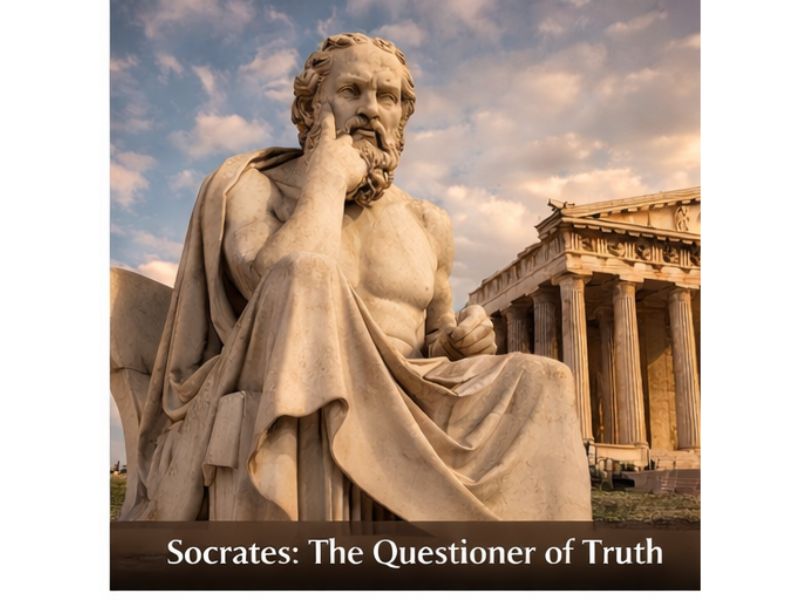
Socrates: The Questioner of Truth
Socrates believed philosophy meant constant questioning. He used a method of dialogue known as the Socratic method to challenge assumptions and expose contradictions.
For him, philosophy was not about providing answers — it was about refining thinking.
Plato: The Seeker of Ideal Forms
Plato expanded philosophy into metaphysics and ethics. He explored concepts like justice, reality, and the ideal state. He believed that true knowledge comes from understanding eternal truths beyond the physical world.
Aristotle: The System Builder
Aristotle organized philosophy into different branches such as logic, ethics, metaphysics, and politics. His systematic approach shaped Western thought for centuries.
Philosophy Beyond Greece: A Global Tradition
Although the word philosophy is Greek, the practice of philosophical thinking existed in many cultures.

Indian Philosophy
In India, philosophical inquiry developed through traditions like:
- Upanishads
- Bhagavad Gita
Indian philosophy explores topics such as consciousness, self (Atman), ultimate reality (Brahman), karma, and liberation (moksha).
Chinese Philosophy
Chinese thinkers also developed profound philosophical systems.
- Confucius emphasized ethics, social harmony, and moral conduct.
- Laozi focused on natural flow and harmony with the Tao.
This shows that philosophy is not limited to one culture — it is a universal human activity.
The Core Branches of Philosophy
To understand what philosophy means, we must explore its main branches.
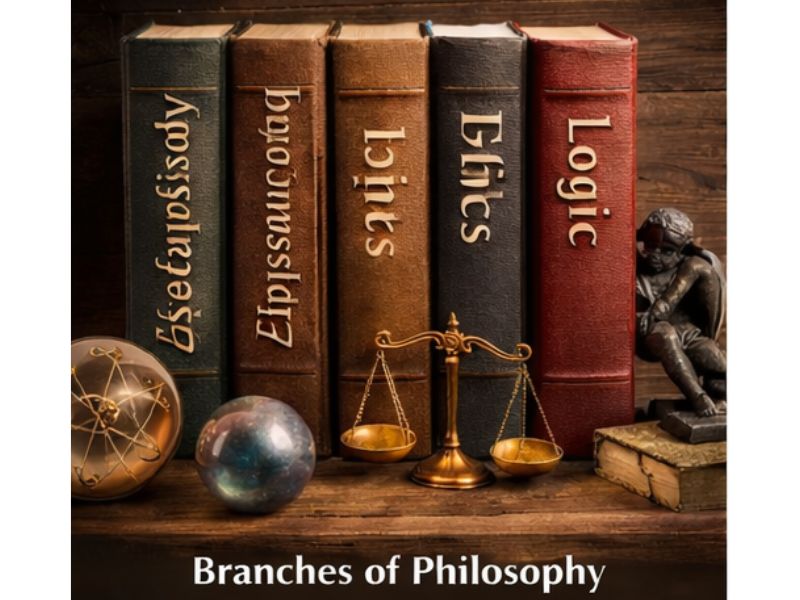
Metaphysics: The Study of Reality
Metaphysics asks:
- What is existence?
- What is time?
- Does free will exist?
- What is the nature of the universe?
It investigates the ultimate nature of reality beyond physical observation.
Epistemology: The Study of Knowledge
Epistemology asks:
- What is knowledge?
- How do we know something is true?
- What is the difference between belief and justified belief?
This branch is crucial in an age of misinformation and digital overload.
Ethics: The Study of Morality
Ethics examines right and wrong, good and evil.
It asks:
- What makes an action morally right?
- Is morality objective or subjective?
- What is a good life?
Philosophical ethics influences law, politics, medicine, and daily decision-making.
Logic: The Study of Reasoning
Logic is the tool of philosophy. It teaches us how to form valid arguments and avoid fallacies.
Without logic, philosophical inquiry collapses into confusion.
Aesthetics: The Study of Beauty
Aesthetics explores questions like:
- What is beauty?
- Is art subjective?
- Why do we find meaning in creativity?
This branch connects philosophy with art, literature, and culture.
Philosophy as a Way of Life
Philosophy is not just academic theory. It can be a practical way of living.
For example:
- Epictetus taught resilience and inner control.
- Marcus Aurelius wrote about self-discipline and acceptance.
In the East, spiritual-philosophical traditions such as Buddhism encourage mindfulness and detachment from suffering, as taught by Gautama Buddha.
These traditions show that philosophy can guide daily habits, emotional strength, and personal growth.
Philosophy vs. Religion vs. Science

Many people confuse philosophy with religion or science. While they overlap, they are distinct.
Philosophy vs Religion
Religion often relies on faith, revelation, and sacred texts. Philosophy relies on reason and argument.
However, philosophy also examines religious ideas critically.
Philosophy vs Science
Science studies observable facts through experiments. Philosophy asks deeper conceptual questions such as:
- What counts as scientific evidence?
- What is the nature of scientific truth?
In fact, science emerged from philosophical inquiry.
Why Philosophy Still Matters Today
In a fast-paced digital world, philosophy might seem outdated. But it is more relevant than ever.
Philosophy helps us:
- Think critically
- Detect misinformation
- Develop strong arguments
- Understand ethical dilemmas
- Build intellectual independence
In an era of artificial intelligence, social media influence, and political polarization, philosophical reasoning is essential for clarity and responsibility.
Different Modern Interpretations of Philosophy
Over centuries, philosophy has evolved into different schools of thought.
Rationalism
Rationalists believe knowledge primarily comes from reason.
Empiricism
Empiricists argue that knowledge comes from sensory experience.
Existentialism
Existentialists focus on human freedom, anxiety, and meaning in an uncertain world.
One of the major existentialist thinkers was Jean-Paul Sartre, who believed that humans are responsible for creating their own meaning.
What Does Philosophy Mean Personally?
On a personal level, philosophy can mean:
- Your guiding principles
- Your worldview
- Your belief system
- Your approach to life
When someone says, “My philosophy is to work hard and stay humble,” they are referring to their personal guiding values.
In this sense, philosophy becomes deeply practical and individual.
Common Misconceptions About Philosophy
Philosophy Is Just Abstract Thinking
While philosophy can be abstract, it has practical applications in law, politics, psychology, and business.
Philosophy Has No Answers
It may not provide final answers, but it refines the questions and strengthens reasoning.
Philosophy Is Only for Intellectuals
In reality, everyone engages in philosophical thinking when they question fairness, truth, or purpose.
The True Essence of Philosophy
At its core, philosophy means:
- Curiosity about existence
- Courage to question assumptions
- Commitment to reason
- Openness to dialogue
- Lifelong pursuit of wisdom
It is not about memorizing theories. It is about developing a reflective and thoughtful mind.
Conclusion: The Meaning of Philosophy in One Sentence
If we had to summarize the meaning of philosophy in one sentence, it would be:
Philosophy is the disciplined love of wisdom expressed through rational inquiry into the fundamental questions of life, knowledge, and existence.
From ancient Greece to India and China, from Socrates to modern existentialists, philosophy remains humanity’s most powerful intellectual tradition.
It teaches us not what to think — but how to think.
And perhaps that is the most valuable meaning of all.
FAQs
1. What is a simple definition of philosophy?
A simple definition of philosophy is:
Philosophy is the study of fundamental questions about life, knowledge, reality, truth, and morality using reason and critical thinking.
It is the practice of asking deep questions such as:
- What is real?
- What is right or wrong?
- How do we know something is true?
- What is the purpose of life?
In short, philosophy is the habit of thinking deeply and logically about important issues.
2. What does the word philosophy literally mean?
The word philosophy comes from the ancient Greek word philosophia. It is made up of two Greek terms:
- Philo – meaning love
- Sophia – meaning wisdom
So, the literal meaning of philosophy is “love of wisdom.”
The term is traditionally connected to Pythagoras, who described himself not as a wise person but as someone who loves and seeks wisdom.
3. What is philosophy in an example?
Philosophy can be understood better through examples.
For instance:
- When you ask, “Is lying ever morally acceptable?” — you are engaging in ethics, a branch of philosophy.
- When you question, “Is what I see always real?” — you are exploring metaphysics.
- When you ask, “How do I know this information is true?” — you are practicing epistemology.
Another simple example: If someone says, “My philosophy in life is to treat others with kindness,” they are expressing their guiding beliefs or personal principles.
Philosophy, therefore, can be both academic and practical.
4. What is a simple word for philosophy?
A simple word for philosophy could be:
- Wisdom
- Belief system
- Worldview
- Way of thinking
- Life principles
While none of these words fully replace philosophy, they help explain it in everyday language. At its heart, philosophy is thoughtful reflection about life.
5. Do philosophy believe in God?
Philosophy itself does not “believe” in anything because it is a discipline, not a religion.
However, philosophers have different views about God:
- Some philosophers argue that God exists.
- Some argue that God does not exist.
- Others say we cannot know for sure.
For example:
- Thomas Aquinas presented logical arguments for the existence of God.
- Friedrich Nietzsche famously declared that “God is dead,” meaning that traditional religious belief was losing influence.
- Immanuel Kant believed that God cannot be proven through pure reason but may be a moral necessity.
Philosophy examines the idea of God through reasoning, not blind faith.
6. Philosophy simple definition?
A very simple definition of philosophy is:
Philosophy is the study of life’s big questions using logic and reason.
It encourages curiosity, questioning, and thoughtful analysis. Instead of accepting ideas without thinking, philosophy teaches us to examine and evaluate them carefully.
7. Definition of philosophy by different philosophers?
Different philosophers have defined philosophy in unique ways.
Socrates
Socrates believed philosophy is the examination of life. He famously said, “The unexamined life is not worth living.” For him, philosophy meant constant questioning and self-reflection.
Plato
Plato viewed philosophy as the search for eternal truths and higher knowledge beyond the physical world.
Aristotle
Aristotle defined philosophy as the study of first causes and principles — understanding the fundamental reasons behind everything.
René Descartes
René Descartes saw philosophy as the foundation of knowledge. His famous statement, “I think, therefore I am,” reflects his belief that philosophy begins with doubt and reasoning.
Bertrand Russell
Bertrand Russell described philosophy as something that lies between theology and science — asking questions that science cannot yet answer.
These definitions show that philosophy evolves with time, but its core remains the pursuit of wisdom.
8. Branches of philosophy?
Philosophy is divided into several major branches:
Metaphysics
The study of reality and existence. It asks what is real and what it means to exist.
Epistemology
The study of knowledge. It examines how we know what we know.
Ethics
The study of morality. It explores right and wrong behavior.
Logic
The study of reasoning. It teaches how to form valid arguments.
Aesthetics
The study of beauty and art.
Each branch focuses on a different aspect of human understanding but works together to explore truth and meaning.
9. What does the word philosophy mean essay?
The word philosophy means “love of wisdom,” but its deeper meaning goes far beyond its literal translation.
Philosophy is the intellectual pursuit of truth about life, knowledge, morality, and existence. It involves critical thinking, logical reasoning, and deep reflection. From ancient Greek thinkers like Socrates to modern philosophers, the goal has remained the same — to understand reality and live wisely.
Philosophy is not only an academic subject; it is a way of thinking and living. It encourages individuals to question assumptions, analyze beliefs, and seek clarity. Whether discussing ethics, science, religion, or politics, philosophy provides tools for thoughtful and rational discussion.
In essence, philosophy is humanity’s search for wisdom.
10. Philosophy word origin?
The origin of the word philosophy can be traced back to ancient Greece.
It comes from the Greek word philosophia, combining:
- Philo (love)
- Sophia (wisdom)
The word became popular in classical Greece and was associated with thinkers like Pythagoras and later developed by Plato and Aristotle.
Over time, the meaning expanded from simply loving wisdom to becoming a structured discipline that studies reality, knowledge, ethics, and reasoning.