The Question We All Quietly Ask

At some point in life—maybe during a late-night overthinking session, after a failure, or even in the middle of success—you’ve probably asked yourself: “What is the purpose of my existence?”
It’s not a strange question. In fact, it’s one of the most human questions you can ask.
The truth is, no matter how busy life gets, this thought keeps coming back. Not always loudly, but subtly—through dissatisfaction, curiosity, or a feeling that something is missing.
Why Do We Even Care About Purpose?

Let’s start with something simple.
Animals live. They survive. They don’t sit around wondering, “What’s my purpose?”
But humans? We can’t help it.
Here’s Why You Think About It
- You’re aware that life is temporary
- You can reflect on your past and imagine your future
- You feel emotions deeply
- You want your life to mean something
And honestly, that’s not a weakness—it’s what makes you human.
But here’s the twist: the more you think about purpose, the more confusing it can feel.
Maybe There’s No Pre-Written Purpose

Let’s address something that might feel uncomfortable at first.
What if there’s no fixed, universal purpose waiting for you?
Sounds Scary… But Also Kind of Freeing
A lot of philosophical ideas suggest that life doesn’t come with a built-in meaning. There’s no hidden script you’re supposed to follow.
At first, that can feel like:
- “Then what’s the point of anything?”
But if you look at it differently, it becomes:
- “I get to decide what matters.”
And that shift? It changes everything.
You’re Probably Trying Too Hard to “Find” It

Be honest—have you ever felt stressed about finding your purpose?
Like:
- “What if I choose the wrong path?”
- “What if I never figure it out?”
That pressure comes from the idea that purpose is something you discover like a lost object.
But What If Purpose Isn’t Found—It’s Created?
Think about it.
- A teacher finds purpose in teaching
- An artist finds purpose in creating
- A parent finds purpose in nurturing
None of these were assigned at birth. They were built over time through choices, experiences, and emotions.
Life Isn’t Just About Big Purpose Moments

We often imagine purpose as something huge:
- A dream career
- A big achievement
- Changing the world
But let’s bring this back to reality.
What If Purpose Is in Small Things Too?
- Laughing with friends
- Helping someone without expecting anything
- Learning something new
- Getting through a tough day
These moments might seem ordinary, but they carry meaning.
And sometimes, chasing a “big purpose” makes us overlook the beauty of everyday life.
Let’s Talk About Different Ways People See Life
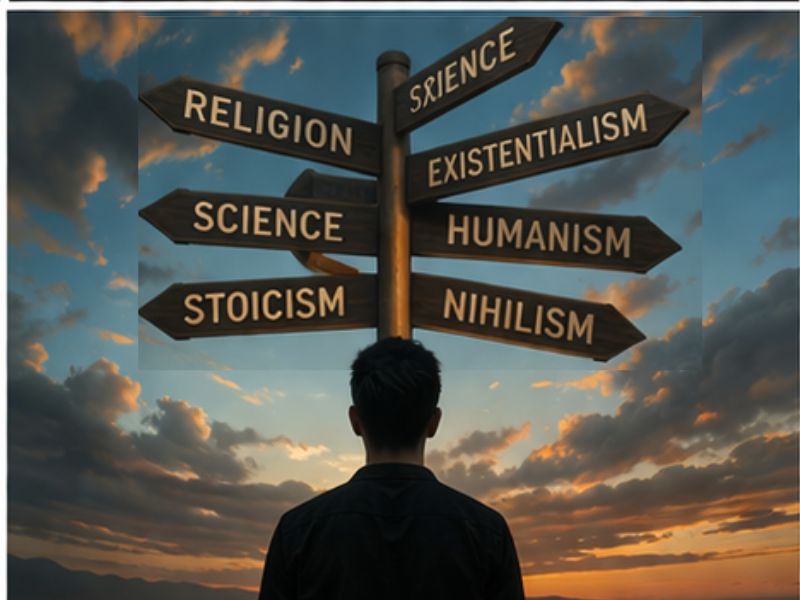
People have been trying to answer this question for centuries, and honestly—there’s no single answer.
But some perspectives are really interesting to think about.
“You Create Your Own Meaning”
Some philosophies say:
Life doesn’t come with meaning—you give it meaning.
So instead of asking:
👉 “What is my purpose?”
You ask:
👉 “What do I want my life to stand for?”
That puts the control back in your hands.
“Maybe Nothing Has Meaning”
This one sounds a bit intense.
Some thinkers believe life has no real meaning at all.
But here’s the surprising part—some people find this idea freeing.
Why?
Because if nothing is fixed:
- You don’t have to live up to expectations
- You don’t have to follow a specific path
- You can live life your way
“Purpose Comes from Being Human”
Another way to look at it is simpler.
Your purpose might come from:
- Being kind
- Growing as a person
- Building relationships
- Making a difference, even in small ways
Nothing dramatic. Just human.
Are You Living Your Purpose… or Someone Else’s?
Let’s pause for a second and get real.
How much of your life is actually your choice?
Society Has a Loud Voice
From a young age, you’re told what success looks like:
- Get a good job
- Earn money
- Build a certain lifestyle
And slowly, you start believing:
👉 “This must be my purpose.”
But is it?
Ask Yourself Honestly
- If no one judged you, what would you do?
- If success wasn’t about money or status, what would matter to you?
Sometimes, what we call “purpose” is just conditioning.
Why Feeling Lost Is Actually a Good Sign
Most people hate feeling lost.
But what if it’s actually important?
Being Lost Means You’re Questioning
- You’re not blindly following
- You’re trying to understand yourself
- You’re searching for something real
And that’s the beginning of clarity.
People who never feel lost often never question anything—and that can be more limiting.
Pain, Confusion, and Growth
Let’s not ignore something important.
Some of your biggest “purpose questions” probably came during tough times.
Why Does Struggle Trigger These Thoughts?
Because pain forces you to pause and reflect.
- It makes you rethink priorities
- It shows what truly matters
- It pushes you to grow
It’s uncomfortable, yes—but also meaningful.
Maybe You Don’t Need a Final Answer
Here’s something most people don’t tell you:
You might never get a clear, final answer to
👉 “What is the purpose of my existence?”
And that’s okay.
Life Isn’t a Problem to Solve
It’s something to experience.
- You evolve
- Your goals change
- Your values shift
So how can one fixed purpose define your entire life?
Purpose Changes As You Change
Think about your life so far.
What felt important 5 years ago probably isn’t the same today.
That’s Because Purpose Isn’t Static
- At one stage, it’s about learning
- At another, it’s about building
- Later, it might be about giving back
Your purpose grows with you.
And that’s a good thing—it means you’re evolving.
So… What Should You Actually Do?
Instead of overthinking purpose, try this approach.
Start Small
You don’t need a life-changing realization.
Just ask:
- What makes me feel fulfilled right now?
- What do I enjoy doing?
- What feels meaningful today?
Focus on Living, Not Just Thinking
- Try new things
- Talk to people
- Explore different paths
Clarity doesn’t come from thinking alone—it comes from experience.
Create Meaning Along the Way
Instead of waiting for purpose to appear:
👉 Build it through your actions
A Simple Way to Look at It
Let’s make this less complicated.
Maybe the purpose of existence is:
- To experience life
- To grow as a person
- To connect with others
- To create something meaningful (big or small)
Not perfect. Not fixed. But real.
Final Thoughts: Your Life, Your Meaning
Here’s the most honest answer you’ll get:
There is no single, universal purpose that fits everyone.
And that’s not a problem—it’s an opportunity.
You’re not here to “find” a predefined path.
You’re here to create one.
So instead of asking:
👉 “What is the purpose of my existence?”
Try asking:
👉 “What kind of life do I want to live?”
Because in the end, purpose isn’t something waiting for you somewhere.
It’s something you build—step by step, choice by choice, day by day.
FAQs
Q1. What is the purpose of existence in life?
The purpose of existence in life doesn’t have a single universal answer. From a philosophical perspective, it often depends on how you choose to define it. For some, it’s about growth and self-discovery; for others, it’s about relationships, contribution, or inner peace. In simple terms, purpose is not something fixed—it’s something you create through your actions, values, and experiences.
Q2. What is your purpose of your existence?
Your personal purpose is unique to you. It is shaped by your interests, values, passions, and life experiences. Instead of trying to “find” a ready-made purpose, it’s more helpful to ask yourself what makes you feel fulfilled, what excites you, and how you want to impact others. Your purpose evolves as you grow.
Q3. What is the purpose of human existence?
From a broader philosophical perspective, the purpose of human existence can be seen as:
- Seeking meaning and understanding
- Experiencing life consciously
- Building relationships and connections
- Growing intellectually, emotionally, and morally
Some philosophies suggest there is no predefined purpose, while others believe it lies in contributing to the greater good or achieving self-realization.
Q4. What is the purpose of my existence philosophy?
In philosophy, your existence is often viewed as something you define yourself. Existential thinkers, for example, believe that life has no inherent meaning, and it’s up to you to create your own purpose through choices and actions. This means your purpose is not given—it is built over time based on how you live your life.
Q5. The reason of my existence meaning?
The “reason” for your existence can be understood in two ways:
- Biological reason: You exist as part of the natural process of life.
- Philosophical reason: You give your life meaning through your thoughts, actions, and experiences.
So, while your existence may have a natural origin, its meaning is something you shape personally.
Q6. What are the 7 levels of existence?
The concept of “7 levels of existence” varies across philosophies and spiritual interpretations, but a commonly understood framework includes:
- Physical existence (body and survival)
- Emotional existence (feelings and relationships)
- Intellectual existence (thinking and learning)
- Social existence (connection with society)
- Moral existence (values and ethics)
- Spiritual existence (inner awareness and purpose)
- Transcendent existence (beyond self, higher consciousness)
These levels represent different dimensions through which humans experience life and meaning.
Q7. Am I living or am I just existing?
This question reflects self-awareness.
- Existing means going through life passively—following routines without deeper engagement.
- Living means being conscious, present, and emotionally involved in your experiences.
If you feel disconnected or unfulfilled, you might just be existing. But if you’re growing, feeling, and actively engaging with life, you’re truly living.
Q8. What are the 4 purposes of life?
While interpretations vary, a commonly accepted framework includes:
- Survival – meeting basic needs and sustaining life
- Growth – learning, evolving, and improving yourself
- Connection – building relationships and contributing to others
- Meaning – finding or creating a sense of purpose
Together, these form a balanced approach to understanding life’s purpose.
Q9. What is the real purpose of our life?
The “real” purpose of life is subjective. For some, it’s happiness; for others, it’s growth, service, or self-realization. Philosophically, many believe that life doesn’t come with a fixed purpose—the real purpose is what you choose to make meaningful in your life.
Q10. What is the reason behind our existence?
The reason behind our existence can be viewed from two angles:
- Scientific: Human existence is the result of natural processes and evolution.
- Philosophical: The reason is not predetermined—you create it through your choices, experiences, and understanding of life.
Ultimately, the deeper meaning of existence is something each person interprets differently based on their perspective.