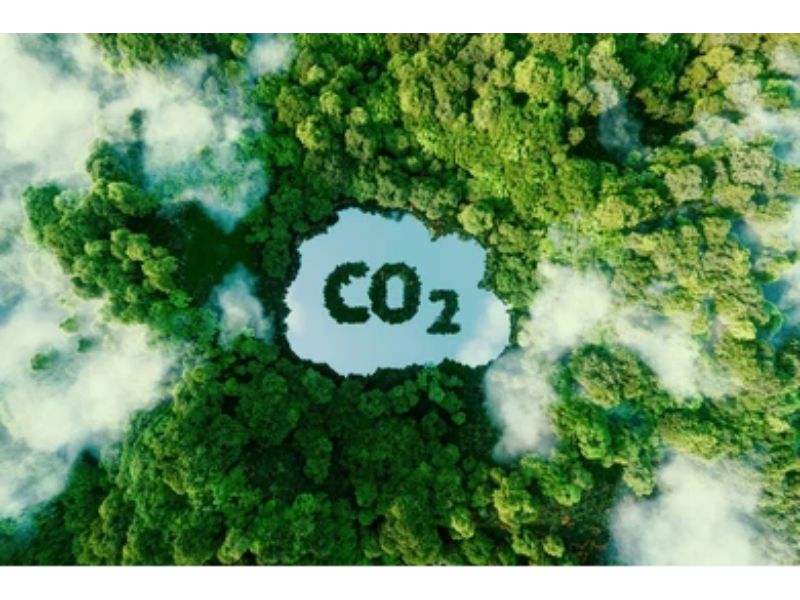
Climate change is primarily driven by the percentage of greenhouse gases caused by humans, especially since the Industrial Revolution. While greenhouse gases naturally occur, the sharp rise in man-made greenhouse gases has intensified global warming. This article explores human-caused greenhouse gas emissions, identifies their sources, and examines how they contribute to the growing climate crisis.
This article explores how much of the greenhouse effect is man-made, breaks down emissions by source, and highlights the critical role humans play in accelerating climate change.
What Are Greenhouse Gases?
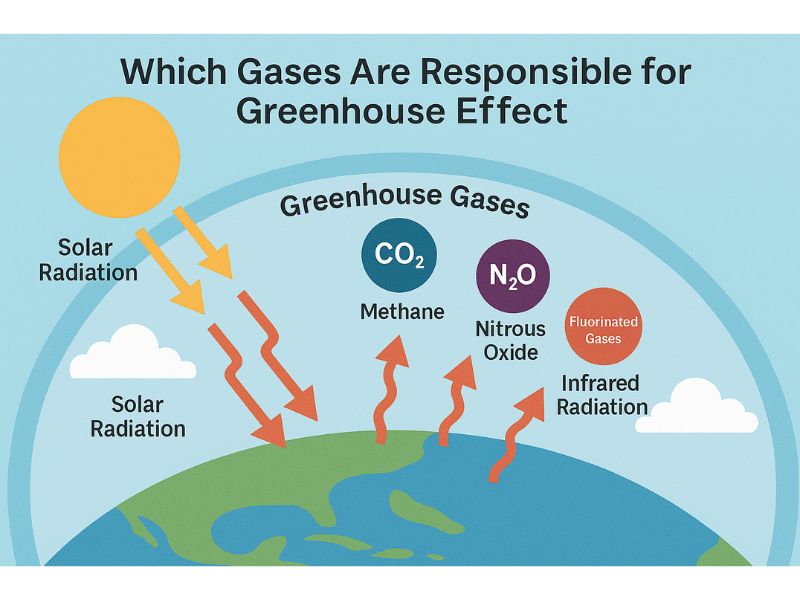
Before examining human influence, it’s essential to understand what greenhouse gases are. Greenhouse gases are atmospheric gases that trap heat from the sun, maintaining Earth’s temperature. The primary greenhouse gases include:
- Carbon dioxide (CO₂)
- Methane (CH₄)
- Nitrous oxide (N₂O)
- Fluorinated gases
These gases are crucial for life, but in excess, they cause the planet to warm beyond safe thresholds.
Natural vs. Human-Caused Greenhouse Gas Emissions
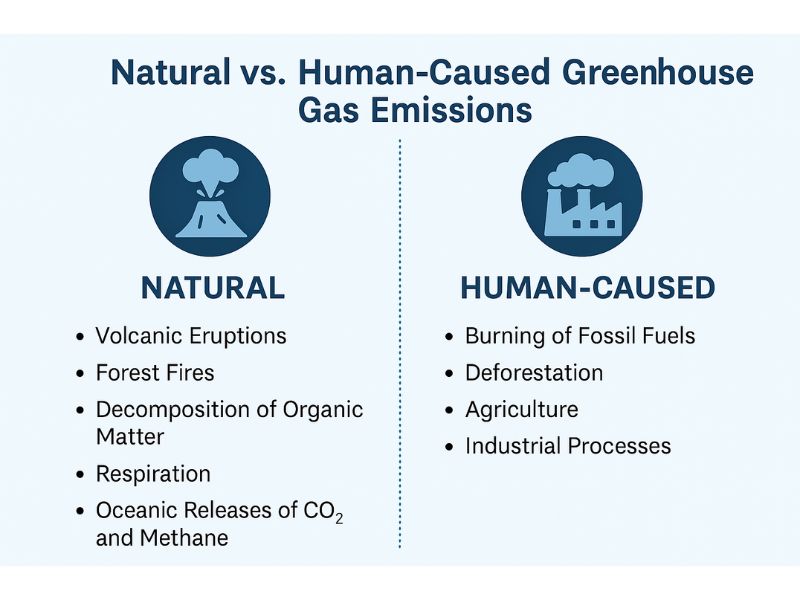
How Greenhouse Gases Occur Naturally
Natural sources of greenhouse gases include:
- Volcanic eruptions
- Forest fires
- Decomposition of organic matter
- Respiration by animals and humans
- Oceanic releases of CO₂ and methane
These processes have maintained a stable atmospheric balance for thousands of years.
The Rise of Anthropogenic (Human-Caused) Emissions
Since the Industrial Revolution, human activity has disrupted this balance. The burning of fossil fuels, large-scale deforestation, agriculture, and industrial processes have released vast quantities of GHGs into the atmosphere.
According to the Intergovernmental Panel on Climate Change (IPCC) and NASA, over 95% of the current increase in global greenhouse gases is directly attributable to human activities.
What Percentage of Greenhouse Gas Emissions Are Caused by Humans?
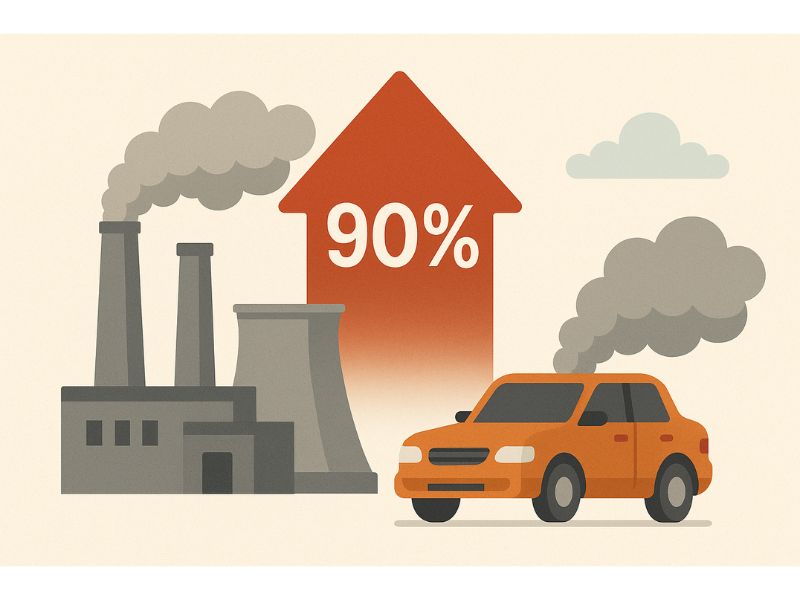
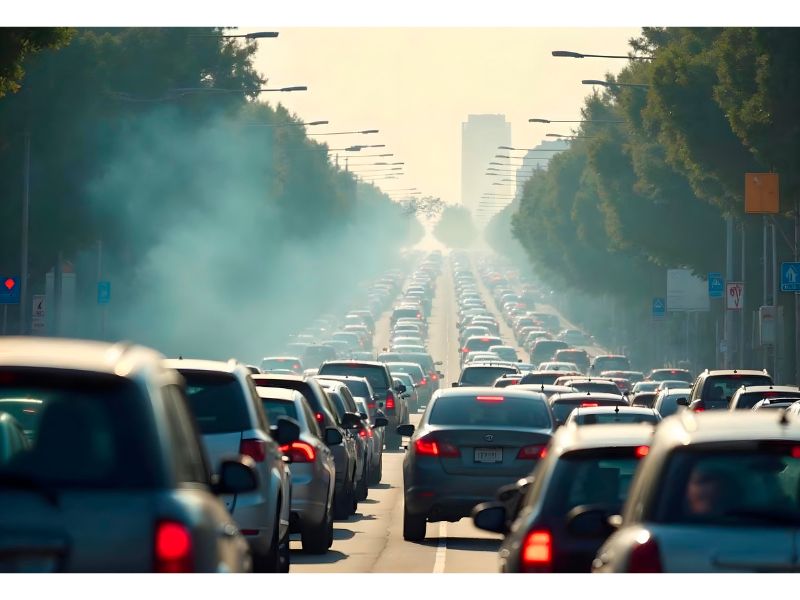
Total Human Contribution: Over 95%
Human activities are responsible for the overwhelming majority of excess greenhouse gases in the atmosphere. While greenhouse gases do occur naturally, the increase in their atmospheric concentrations—particularly since 1850—is almost entirely due to anthropogenic sources.
- CO₂ levels have risen by over 50% since pre-industrial times, mostly due to fossil fuel combustion and deforestation.
- Methane levels have more than doubled due to agriculture (especially livestock), landfills, and fossil fuel extraction.
- Nitrous oxide has increased by around 20%, mainly from agricultural fertilizers and industrial processes.
According to the U.S. Environmental Protection Agency (EPA), human-caused greenhouse gas emissions accounted for:
- 76% carbon dioxide
- 16% methane
- 6% nitrous oxide
- 2% fluorinated gases
These numbers are part of the global anthropogenic emissions profile.
Sector-Wise Breakdown of Human Greenhouse Gas Emissions
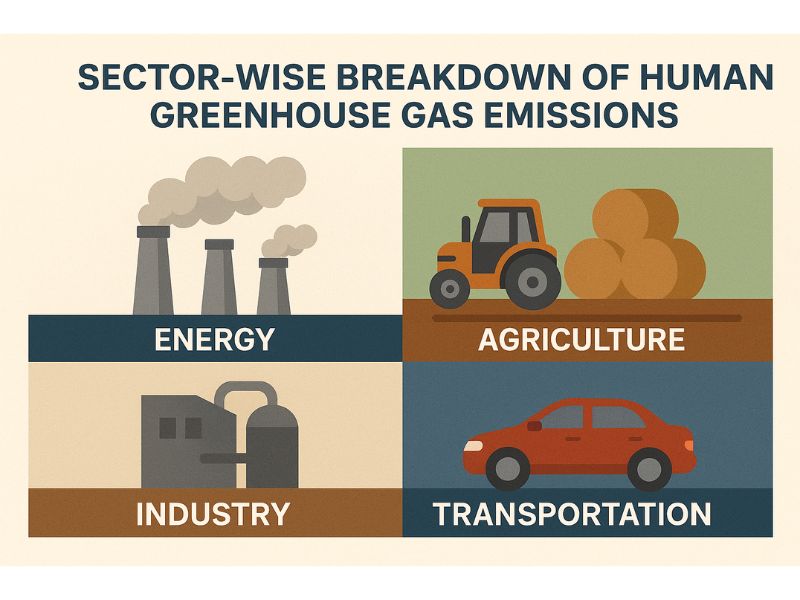
1. Energy Production – The Largest Contributor
Burning fossil fuels for electricity and heat is the largest source of human-caused CO₂ emissions. This includes:
- Coal-fired power plants
- Oil and gas production
- Industrial energy use
Energy production contributes approximately 73% of total CO₂ emissions.
2. Transportation and Mobility
Emissions from vehicles, airplanes, ships, and trains account for roughly 15-20% of global GHG emissions. These are mainly CO₂ emissions from:
- Gasoline and diesel engines
- Aviation fuel
- Marine fuel
Transportation is a rapidly growing source due to global trade and urbanization.
3. Agriculture and Livestock
Agriculture is a major source of methane (CH₄) and nitrous oxide (N₂O):
- Enteric fermentation in livestock produces methane.
- Fertilizer application emits nitrous oxide.
- Rice paddies emit methane due to anaerobic decomposition.
This sector contributes nearly 18% of total greenhouse gas emissions, primarily from non-CO₂ gases.
4. Industry and Manufacturing
Industrial emissions come from:
- Cement and steel production
- Chemical manufacturing
- Mining and waste processing
Cement manufacturing alone contributes to about 8% of global CO₂ emissions.
5. Deforestation and Land Use Changes
Trees absorb CO₂, acting as carbon sinks. When forests are cleared for agriculture or urban development, this carbon is released back into the atmosphere. Deforestation is responsible for 11-15% of total GHG emissions.
6. Waste Management
Decomposing organic waste in landfills releases methane. Inadequate waste management adds 2-3% of human-caused GHG emissions globally.
Greenhouse Gas Emissions by Gas Type: Human Influence
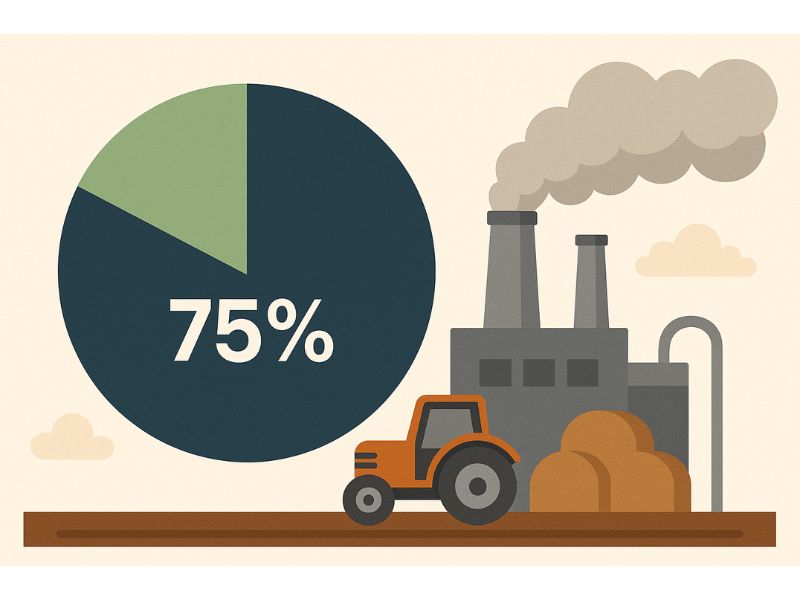
Carbon Dioxide (CO₂)
- 76% of total human-caused GHG emissions
- Comes mainly from fossil fuel burning and deforestation
- Stays in the atmosphere for hundreds of years
Methane (CH₄)
- 16% of human-caused emissions
- 84x more potent than CO₂ over a 20-year period
- Agriculture, oil and gas extraction are major sources
Nitrous Oxide (N₂O)
- 6% of total emissions
- Around 300x more potent than CO₂
- Stays in the atmosphere for over 100 years
Fluorinated Gases
- 2% of emissions but extremely high global warming potential (GWP)
- Used in refrigeration, air conditioning, and manufacturing
Is Climate Change Mostly Caused by Humans?
Yes. Multiple lines of scientific evidence—including satellite measurements, carbon isotope analysis, and climate modeling—show that the current rate of climate change is largely due to human actions.
Natural cycles, such as solar variability or volcanic activity, cannot account for the sharp rise in GHG concentrations observed over the last 150 years.
How Human Activities Accelerate the Greenhouse Effect
Fossil Fuel Combustion
Coal, oil, and gas release carbon that had been locked underground for millions of years. Once burned, this carbon becomes atmospheric CO₂, intensifying the greenhouse effect.
Deforestation
Trees absorb CO₂, and their removal reduces Earth’s natural ability to offset emissions. Slash-and-burn practices further compound the problem.
Industrialization and Urbanization
Cement production, steel manufacturing, and urban sprawl increase energy demand and GHG output, often without sufficient mitigation or regulation.
Table: Sector-Wise Contribution to Human-Caused Greenhouse Gas Emissions
| Sector | Primary GHGs Emitted | Approximate % of Global Emissions | Main Sources |
|---|---|---|---|
| Energy Production | CO₂ | 73% | Fossil fuels (coal, oil, gas), electricity and heat generation |
| Transportation | CO₂ | 15–20% | Cars, trucks, airplanes, ships |
| Agriculture & Livestock | CH₄, N₂O | 18% | Livestock digestion, rice paddies, synthetic fertilizers |
| Industry & Manufacturing | CO₂, F-gases | 14–21% | Cement, steel, chemical production, refrigeration |
| Deforestation & Land Use | CO₂ | 11–15% | Logging, slash-and-burn farming, land conversion |
| Waste Management | CH₄ | 2–3% | Landfills, sewage treatment, unmanaged organic waste |
Why Understanding Human Contribution Matters
Understanding the human percentage of greenhouse gas emissions is essential because it:
- Highlights accountability: Human actions are reversible and controllable.
- Shapes climate policy: Helps governments and organizations design targeted mitigation strategies.
- Promotes sustainable practices: Encourages clean energy adoption, efficient farming, and green transport.
- Educates and empowers individuals: Informed citizens can make greener lifestyle choices.
Reducing Human-Caused Greenhouse Gas Emissions
Transition to Renewable Energy
Solar, wind, hydro, and geothermal energy sources can replace coal and oil, significantly cutting carbon emissions.
Energy Efficiency
Modernizing infrastructure, using energy-efficient appliances, and smart grids can reduce unnecessary energy use.
Sustainable Agriculture
Techniques like crop rotation, reduced fertilizer use, and methane-reducing feed for livestock can lower non-CO₂ emissions.
Forest Conservation and Afforestation
Protecting forests and planting new trees help sequester carbon and restore natural carbon sinks.
Waste Reduction and Recycling
Improving waste segregation, composting, and recycling lowers methane emissions from landfills.
Final Thoughts: Human Footprint on Global Warming
In conclusion, humans are responsible for over 95% of the increase in atmospheric greenhouse gases since the industrial age. Energy production, agriculture, transportation, and industrialization are the primary culprits. While greenhouse gases occur naturally, the current levels are drastically elevated due to human influence, resulting in global warming, rising sea levels, and extreme weather events.
The good news? Human actions caused this—and human actions can fix it.
Frequently Asked Questions (FAQs)
1. How much greenhouse gas is produced by humans?
As of the latest global data, human activities emit over 50 billion metric tons of greenhouse gases annually, measured in CO₂-equivalent (CO₂e). This includes:
- Carbon dioxide (CO₂) – about 76%
- Methane (CH₄) – about 16%
- Nitrous oxide (N₂O) – about 6%
- Fluorinated gases – about 2%
Since 1850, the human contribution to the increase in greenhouse gas levels accounts for over 95% of the excess warming-causing emissions.
2. What is the biggest contributor to greenhouse gases?
The biggest contributor to greenhouse gases is the energy production sector, particularly:
- Burning fossil fuels like coal, oil, and natural gas
- Used for electricity generation, heating, and industrial processes
This sector alone contributes to around 73% of all CO₂ emissions from human activities globally.
3. Where does 90% of global warming occur?
About 90% of global warming occurs in the oceans. The oceans absorb the majority of the excess heat trapped by greenhouse gases in the atmosphere.
- This causes ocean warming, rising sea levels, coral bleaching, and extreme weather events like hurricanes and typhoons.
4. Greenhouse gas emissions by source?
Here’s a quick breakdown of greenhouse gas emissions by major sources:
| Source | Primary GHGs | Approx. Share of Total Emissions |
|---|---|---|
| Energy (electricity & heat) | CO₂ | 73% |
| Transportation | CO₂ | 15–20% |
| Industry & Manufacturing | CO₂, F-gases | 14–21% |
| Agriculture & Livestock | CH₄, N₂O | 18% |
| Land Use & Deforestation | CO₂ | 11–15% |
| Waste Management | CH₄ | 2–3% |
5. What are the 10 causes of climate change?
Here are the 10 major causes of climate change, mostly human-induced:
- Burning of fossil fuels (coal, oil, gas)
- Deforestation
- Industrial processes
- Agriculture (especially livestock and rice farming)
- Land-use changes
- Overconsumption and excessive energy use
- Transportation emissions
- Waste management inefficiencies
- Urbanization and construction
- Use of fluorinated gases in refrigeration and manufacturing
6. Greenhouse gas emissions by country?
Here are the top greenhouse gas-emitting countries (CO₂e basis):
| Country | % of Global GHG Emissions |
|---|---|
| China | ~29% |
| United States | ~14% |
| India | ~7% |
| EU (28 countries) | ~7% |
| Russia | ~5% |
| Japan | ~3% |
Note: These percentages fluctuate annually and depend on the sectors and energy mixes of each country.
7. Sources of greenhouse gases?
The main sources of greenhouse gases include:
- Burning fossil fuels (coal, oil, natural gas)
- Deforestation and land-use change
- Agriculture and livestock farming
- Industrial production
- Waste decomposition in landfills
- Refrigerants and other synthetic gases
These activities release CO₂, CH₄, N₂O, and F-gases into the atmosphere.
8. Greenhouse gases percentage contribution to global warming?
Here’s a general estimate of how much each greenhouse gas contributes to global warming (by global warming potential and prevalence):
| Greenhouse Gas | % Contribution to Global Warming |
|---|---|
| Carbon Dioxide (CO₂) | ~76% |
| Methane (CH₄) | ~16% |
| Nitrous Oxide (N₂O) | ~6% |
| Fluorinated gases | ~2% |
These values reflect their global warming potential and atmospheric concentration over a 100-year period.
9. What percentage of greenhouse gases come from human activity?
Over 95% of the excess greenhouse gases accumulated in the atmosphere since the Industrial Revolution are due to human activity, primarily through:
- Fossil fuel combustion
- Deforestation
- Industrial emissions
- Agricultural practices
10. Are humans the main cause of climate change?
Yes, the scientific consensus is clear: humans are the main cause of climate change.
- The IPCC (Intergovernmental Panel on Climate Change) states with 95–100% certainty that human influence is the dominant cause of global warming since the mid-20th century.
11. Which sector emits the most greenhouse gases?
The energy sector—specifically electricity and heat generation—emits the most greenhouse gases, responsible for:
- Around 73% of CO₂ emissions
- Mainly from burning coal, oil, and natural gas
12. How can we reduce human greenhouse gas emissions?
Here are effective ways to reduce GHG emissions caused by humans:
Individual actions like reducing energy use, using LEDs, and eating local
Shift to renewable energy (solar, wind, hydro)
Improve energy efficiency in homes and industries
Adopt sustainable agriculture and reduce meat consumption
Promote reforestation and halt deforestation
Improve public transport and reduce car dependency
Enhance recycling and waste management
Support green technology and innovation
Enforce climate policies and carbon pricing
Encourage climate education and awareness