
Discuss Philosophy of Life and Individual Qualities
The philosophy of life is one of the most profound subjects a human being can explore. It shapes how we see the world, how we treat others, and how we understand ourselves. From ancient civilizations to the modern digital age, thinkers have tried to answer questions such as: What is the purpose of life? What makes a person virtuous? How should an individual live?
When we discuss Philosophy of Life and Individual Qualities, we are essentially examining the values, beliefs, character traits, and moral principles that guide human behavior. This topic is not only theoretical but deeply practical. Your life philosophy influences your decisions, relationships, career, and even your mental well-being.
In this comprehensive guide, we will explore the meaning of life philosophy, its historical foundations, and the key individual qualities that define a meaningful and successful life.
What Is the Philosophy of Life?

The philosophy of life refers to a personal framework of beliefs and values that guide how an individual understands existence and conducts their life. It answers fundamental questions about meaning, purpose, happiness, morality, and success.
The term philosophy comes from the Greek word philosophia, meaning “love of wisdom.” Ancient thinkers like Socrates, Plato, and Aristotle believed that examining life was essential for human growth. Socrates famously stated that an unexamined life is not worth living, emphasizing the importance of reflection.
A philosophy of life is not necessarily religious, though it can be. It may be spiritual, ethical, rational, or humanistic. Some people develop their philosophy consciously, while others absorb it from culture, family, education, and experiences.
Historical Perspectives on Life Philosophy
Throughout history, various philosophical traditions have shaped humanity’s understanding of life.
Greek Philosophy and Virtue Ethics
Ancient Greek philosophy focused on virtue and character. Aristotle believed that the goal of life was eudaimonia—often translated as flourishing or living well. According to him, developing virtues like courage, wisdom, and moderation leads to a fulfilling life.
Plato emphasized justice and harmony in both the individual soul and society. These early ideas laid the foundation for Western ethical thought.
Eastern Philosophical Traditions
Eastern philosophies provide a different yet complementary perspective.
Confucius emphasized moral character, social harmony, and respect for tradition. His teachings highlight individual responsibility within the community.
Laozi introduced Taoism, encouraging individuals to live in harmony with the natural flow of life (the Tao). Simplicity, humility, and balance are central qualities in this tradition.
Similarly, Gautama Buddha taught that suffering arises from attachment and desire. Mindfulness, compassion, and self-awareness are key virtues in Buddhist life philosophy.
Modern Existentialism
In modern times, philosophers like Jean-Paul Sartre argued that life has no predetermined meaning; instead, individuals must create their own purpose through choices and actions. Existentialism emphasizes freedom, responsibility, and authenticity.
These diverse traditions show that while philosophies of life differ in approach, they all focus on developing meaningful individual qualities.
The Meaning and Purpose of Life
One of the central themes in life philosophy is the search for meaning.
Some believe that life’s purpose lies in happiness. Others argue it is about service, self-realization, or spiritual enlightenment. Modern psychology supports the idea that having a sense of purpose improves mental health, resilience, and life satisfaction.
Purpose gives direction. Without it, individuals may feel lost or disconnected. A clear life philosophy helps answer questions like:
- What truly matters to me?
- What values guide my decisions?
- How do I define success?
Understanding your purpose shapes your character and strengthens personal qualities.
Individual Qualities That Shape a Meaningful Life
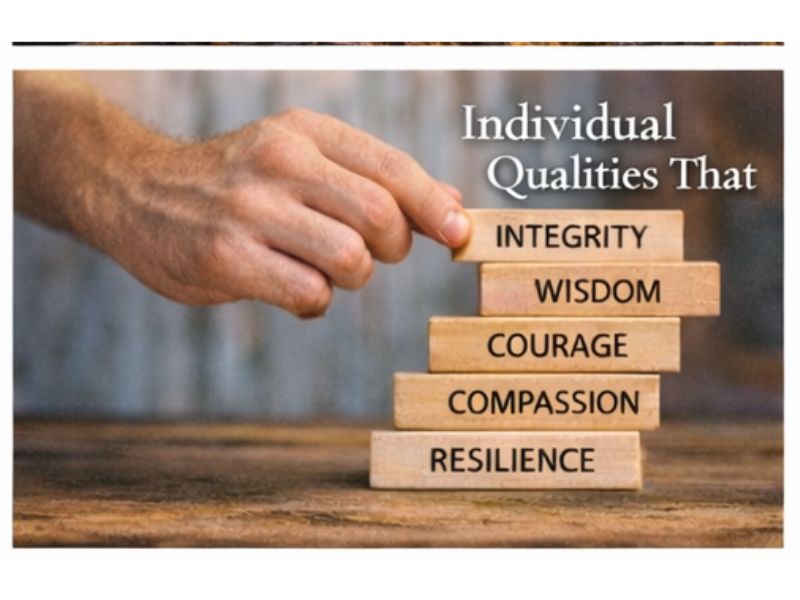
When discussing philosophy of life and personal qualities, character development becomes central. A strong philosophy must be reflected in actions and behavior.
Integrity and Moral Character
Integrity is the alignment between beliefs and actions. A person with integrity stands by their values even under pressure.
Philosophical traditions across cultures emphasize honesty, fairness, and responsibility. Without moral character, knowledge and talent lose their value.
Integrity builds trust in relationships and credibility in professional life.
Wisdom and Critical Thinking
Wisdom goes beyond intelligence. It involves good judgment, self-awareness, and the ability to learn from experience.
Socrates valued questioning assumptions. Critical thinking allows individuals to analyze situations logically rather than react emotionally.
A wise person understands complexity and avoids extreme thinking. In today’s world of information overload, wisdom is more important than ever.
Courage and Resilience
Life inevitably involves challenges. Courage enables individuals to face fear and uncertainty with strength.
Resilience—the ability to recover from setbacks—is a vital quality in modern society. Philosophical teachings often stress endurance and perseverance.
Without courage, individuals may remain stuck in comfort zones. With it, they grow beyond limitations.
Compassion and Empathy
A meaningful life is not lived in isolation. Compassion allows us to understand and care for others.
Buddhist philosophy emphasizes loving-kindness, while Confucian ethics promote social harmony. Empathy strengthens relationships and reduces conflict.
Compassionate individuals contribute positively to society, making the world more humane.
Self-Discipline and Responsibility
Freedom without discipline leads to chaos. Personal responsibility is essential in shaping destiny.
Existentialist thinkers argued that humans are responsible for their choices. Blaming circumstances prevents growth.
Self-discipline enables individuals to pursue long-term goals instead of short-term pleasures.
The Role of Self-Reflection in Life Philosophy

Self-reflection is the process of examining one’s thoughts, actions, and motives. It is the foundation of personal development.
Keeping a journal, meditating, or engaging in thoughtful conversations can deepen understanding. When individuals reflect regularly, they identify weaknesses and strengths.
Reflection transforms philosophy from abstract ideas into practical guidance.
Personal Values and Ethical Living
Values are the core principles that define what we consider important.
Common values include honesty, loyalty, kindness, freedom, equality, and justice. Ethical living means aligning actions with these values.
For example, if a person values honesty but lies frequently, internal conflict arises. A consistent life philosophy eliminates such contradictions.
Living ethically does not mean being perfect. It means striving toward alignment between belief and behavior.
The Connection Between Philosophy and Happiness

Many philosophical systems explore happiness as a life goal.
Aristotle’s concept of flourishing suggests that happiness is not mere pleasure but living virtuously. Modern research supports this idea: meaningful relationships, purpose, and personal growth contribute more to happiness than material wealth.
A well-developed life philosophy helps individuals focus on long-term fulfillment rather than temporary satisfaction.
Individual Growth and Self-Actualization
Self-actualization refers to realizing one’s full potential.
A strong philosophy encourages continuous learning and improvement. Individuals who value growth are open to new experiences and feedback.
Personal growth involves:
- Developing new skills
- Improving emotional intelligence
- Strengthening mental resilience
- Expanding knowledge
Growth-oriented individuals see failures as lessons rather than defeats.
Balancing Individualism and Social Responsibility
While personal development is important, humans are social beings.
A healthy philosophy balances self-interest with concern for others. Excessive individualism can lead to isolation, while ignoring personal needs can cause burnout.
Social responsibility includes contributing to community welfare, respecting diversity, and promoting fairness.
True fulfillment often arises when personal success aligns with collective well-being.
The Impact of Culture on Life Philosophy
Culture significantly shapes beliefs and values.
Family traditions, education systems, religion, and media influence how individuals define success and morality.
However, mature individuals critically evaluate cultural norms rather than accepting them blindly. Developing an independent life philosophy requires thoughtful examination of inherited beliefs.
Practical Steps to Develop Your Own Philosophy of Life

Creating a personal life philosophy is an ongoing process. Here are practical steps:
Identify Core Values
List principles that matter most to you. Ask yourself what qualities you admire in others.
Reflect on Life Experiences
Difficult experiences often clarify priorities. Consider what challenges have taught you.
Study Philosophical Ideas
Reading classical and modern philosophy broadens perspective. Exposure to diverse ideas refines thinking.
Practice Self-Awareness
Meditation and introspection help uncover unconscious motivations.
Live Consistently
Apply your philosophy in daily decisions. Consistency strengthens character.
Common Misconceptions About Life Philosophy
Many people believe philosophy is abstract or impractical. In reality, every individual already operates under some life philosophy—even if unconsciously.
Another misconception is that philosophy is only for intellectuals. In truth, farmers, artists, entrepreneurs, and scientists all develop guiding principles through lived experience.
Life philosophy is universal because it deals with universal questions.
The Relationship Between Success and Character
Success without character is unstable.
History shows that talent alone does not guarantee lasting achievement. Individual qualities such as perseverance, humility, and ethical integrity determine sustainable success.
Employers increasingly value emotional intelligence and ethical judgment alongside technical skills.
A strong life philosophy strengthens professional credibility and leadership ability.
Philosophy of Life in the Modern World
Today’s world is fast-paced, digital, and interconnected. Social media, globalization, and technological advancements create new ethical challenges.
Modern individuals must navigate:
- Information overload
- Cultural diversity
- Career uncertainty
- Rapid social change
A clear philosophy of life acts as a compass in this complexity. It prevents external noise from overpowering internal values.
Mindfulness, adaptability, and ethical awareness are crucial qualities for contemporary life.
Why Discussing Philosophy of Life Matters
Discussing philosophy of life and individual qualities is not merely academic—it is transformative.
When individuals consciously examine their beliefs:
- They make better decisions
- They build stronger relationships
- They develop resilience
- They experience deeper fulfillment
Societies also benefit when citizens value integrity, compassion, and responsibility.
A thoughtful life philosophy encourages peaceful coexistence and ethical progress.
Conclusion: Integrating Life Philosophy and Personal Qualities
The philosophy of life is the foundation upon which character is built. It shapes identity, guides choices, and influences destiny.
From ancient teachings of Socrates and Confucius to modern existential thought, one truth remains consistent: a meaningful life requires conscious reflection and strong individual qualities.
Integrity, wisdom, courage, compassion, and self-discipline are not accidental traits. They develop through intentional living and philosophical inquiry.
In the end, discussing philosophy of life and individual qualities leads us back to a simple yet profound realization: the quality of our lives depends on the quality of our character.
By cultivating a thoughtful life philosophy and nurturing positive personal traits, we not only enrich our own existence but also contribute to a better world.
FAQs
1. What is philosophy of life and individual qualities?
The philosophy of life refers to a person’s guiding beliefs, values, and principles that shape how they understand existence, make decisions, and respond to challenges. It answers fundamental questions about meaning, purpose, morality, happiness, and success.
Individual qualities, on the other hand, are the personal traits and characteristics that define a person’s character. These include integrity, honesty, courage, compassion, wisdom, resilience, discipline, and empathy. A strong philosophy of life influences the development of these qualities.
For example, if someone believes that life’s purpose is to serve others, they are more likely to cultivate compassion and generosity. If someone values truth and reason, they may develop critical thinking and intellectual honesty.
In short, philosophy of life provides the direction, while individual qualities determine how effectively that direction is followed.
2. What is the philosophy of life?
The philosophy of life is a framework of ideas that helps individuals interpret reality and determine how they should live. It can be shaped by religion, culture, personal experiences, education, and reflection.
Ancient philosophers such as Socrates believed that examining life was essential for wisdom. Later thinkers like Aristotle emphasized virtue and moral character as central to a good life.
Some people adopt spiritual philosophies focused on enlightenment and harmony, influenced by figures like Gautama Buddha. Others follow existentialist ideas, such as those expressed by Jean-Paul Sartre, who argued that individuals must create their own meaning.
Ultimately, philosophy of life is personal. It defines what you consider important and how you choose to live.
3. What are the 7 types of philosophy?
There are many philosophical systems, but seven widely recognized types include:
- Metaphysics – The study of reality, existence, and the nature of being.
- Epistemology – The study of knowledge, truth, and belief.
- Ethics – The study of morality and right conduct.
- Logic – The study of reasoning and valid arguments.
- Aesthetics – The study of beauty, art, and taste.
- Political Philosophy – The study of justice, government, and society.
- Existentialism – A modern philosophy focusing on freedom, choice, and personal meaning.
These types help structure philosophical inquiry and address different dimensions of life and human understanding.
4. Discuss philosophy of life and individual qualities essay?
An essay on philosophy of life and individual qualities explores how personal beliefs shape character and behavior.
A well-developed life philosophy encourages individuals to cultivate virtues such as integrity, courage, compassion, wisdom, and responsibility. It guides ethical decision-making and promotes personal growth.
For example, someone influenced by virtue ethics may prioritize honesty and fairness. Someone inspired by existentialism may value authenticity and personal responsibility. Eastern philosophies often emphasize harmony, balance, and self-discipline.
The essay would conclude that meaningful living depends not only on abstract beliefs but also on practical qualities that shape everyday actions.
5. Discuss law of nature?
The law of nature refers to universal principles believed to govern human behavior and morality. It suggests that certain rights and moral truths are inherent in human nature and can be discovered through reason.
The concept was developed by thinkers such as Thomas Aquinas, who argued that natural law reflects divine order, and John Locke, who believed natural rights include life, liberty, and property.
Natural law theory maintains that laws should align with moral principles rooted in human nature. If a law contradicts basic moral values, it may be considered unjust.
This concept influenced modern human rights and democratic systems.
6. Discuss the purpose of human life?
The purpose of human life is one of philosophy’s most debated questions.
Different perspectives include:
- Religious View: Life’s purpose is to fulfill divine will or achieve spiritual salvation.
- Aristotelian View: The goal is human flourishing through virtue.
- Existentialist View: Individuals create their own purpose through free choices.
- Humanistic View: The aim is self-development and contribution to society.
Psychologically, having purpose improves well-being and resilience. Philosophically, purpose gives coherence and direction to life.
Ultimately, the purpose of human life may differ for each individual, but it often involves growth, relationships, and meaningful contribution.
7. Explain in detail the philosophy of life and the meaning of human?
The philosophy of life examines what it means to be human and how humans should live. It integrates ethics, psychology, metaphysics, and social thought.
To understand the meaning of human existence, philosophers explore questions like:
- What distinguishes humans from other beings?
- Do humans have free will?
- Is life inherently meaningful or self-created?
Some traditions emphasize rationality as the defining human trait. Others highlight emotional depth, creativity, or spiritual awareness.
Existentialist thinkers argue that humans are unique because they are self-conscious and capable of choosing their identity. In contrast, classical philosophy views humans as rational animals whose purpose is fulfilled through virtue.
The meaning of being human often includes self-awareness, moral responsibility, and the capacity for growth.
8. What are the 5 types of philosophy?
Five commonly recognized types of philosophy are:
- Metaphysics – Nature of reality.
- Epistemology – Nature of knowledge.
- Ethics – Moral values and duties.
- Logic – Principles of reasoning.
- Aesthetics – Study of beauty and art.
These five areas form the foundation of most philosophical discussions.
9. What are the 10 categories in philosophy?
Philosophy can be divided into ten broad categories:
- Metaphysics
- Epistemology
- Ethics
- Logic
- Aesthetics
- Political Philosophy
- Philosophy of Religion
- Philosophy of Mind
- Philosophy of Language
- Philosophy of Science
These categories explore different aspects of reality, human knowledge, morality, and society.
10. What are the 4 branches of philosophy?
The four major branches of philosophy are:
- Metaphysics – Study of existence and reality.
- Epistemology – Study of knowledge and belief.
- Ethics – Study of moral principles.
- Logic – Study of valid reasoning.
Some scholars also include aesthetics as a fifth branch, but traditionally these four form the core structure of philosophical inquiry.